
Medical device precision machining: Swiss turning, 5-axis CNC and EDM
Instrument components, implant components and small tight-tolerance parts in titanium, 316L and 17-4 PH stainless, and PEEK. Machined and inspected in-house under our ISO 13485 certified quality system at our FDA-registered U.S. facility, from prototype through production, with no minimum order.
UTP Solutions machines precision medical device components under an ISO 13485 certified quality system at our FDA-registered U.S. facility. Our precision machining family covers Swiss-type CNC turning up to 20 mm diameter, 3-, 4- and 5-axis milling, CNC turning, grinding, and wire and sinker EDM. We hold ±0.0005" on most milled features, down to ±0.0001" on select features, and grind to ±0.0001" consistently. We support prototypes through production volumes, with no minimum order.
Machining capabilities
| Swiss-type CNC turning | Tsugami S206-II · parts up to 20 mm turned diameter |
|---|---|
| Milling | 3-, 4- and 5-axis machining for complex, multi-face parts in fewer setups |
| EDM | Wire and sinker EDM (Sodick) for sharp internal corners, fine features and hardened materials |
| Tolerances | Milling ±0.0005" on most features, down to ±0.0001" on select features · grinding ±0.0001" consistently |
| Grinding | Surface grinding to ±0.0001" · cylindrical and centerless grinding for pins, bushings and rods |
| Metrology | Onsite QC laboratory with equipment including two CMMs measuring features to 0.0001", a Keyence vision measurement system and a profilometer for surface finish · in-process inspection · MSA including Gage R&R · capability studies · gage and fixture design |
| Machine shop | 14,000 sq. ft. CNC machine shop, in-house alongside molding, tooling and assembly |
| Materials | Titanium Grade 2 (CP, ASTM F67), Grade 5 (Ti-6Al-4V) and Grade 23 (Ti-6Al-4V ELI, ASTM F136), stainless steel in all grades including 316L (ASTM F138) and 17-4 PH, Inconel 625/718, tool steels and PEEK. Specific alloys confirmed per program. |
| Finishing | In-house: precision cleaning, citric or nitric passivation, UDI laser marking, bead, sand and aluminum oxide blasting. Managed through qualified suppliers: heat treat, polishing, color anodizing, electropolishing, TiN/PVD coating. |
| Volume | Prototypes through production · no minimum order quantity |
| Quality system | ISO 13485 certified · ISO 9001 · IATF 16949 · FDA-registered facility · ITAR compliant |
Swiss machining for small, slender medical parts
Swiss-type turning supports the bar stock while the tool cuts close to the guide bushing. That keeps long, thin parts stable and lets the machine turn, mill, drill and thread in one cycle. It's the right process for pins, screws, shafts and small turned components with tight concentricity.
UTP runs Swiss-type CNC turning on a Tsugami S206-II for parts up to 20 mm in diameter, with capacity available now. Turned parts can go straight to EDM, milling, insert molding or assembly in the same building.
- Surgical instrument components
- Pins, screws and threaded features
- Fittings, fasteners and connectors
- Shafts and small complex turned components
- Machined inserts for insert-molded assemblies
Multi-axis milling and EDM
3-, 4- and 5-axis milling
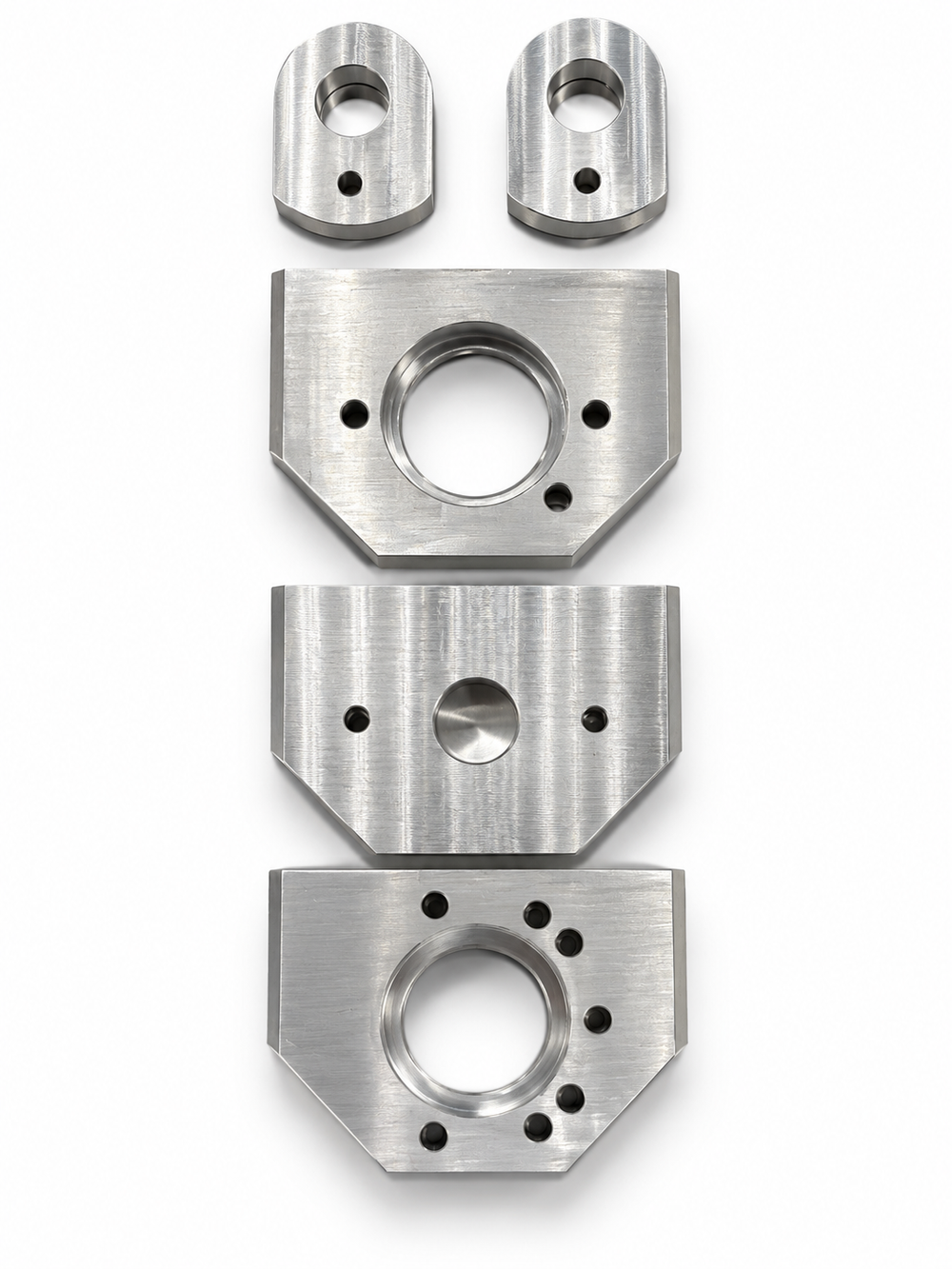
Complex, multi-face geometries in fewer setups, which reduces handling error on instrument components, housings and precision parts.
Wire and sinker EDM
Features conventional cutting can't reach: sharp internal corners, fine detail and hardened or exotic materials, cut without tool pressure.
Grinding
Ground features held to ±0.0001" consistently for fits and surfaces that milling alone can't hold.
Medical applications
Surgical instrument components
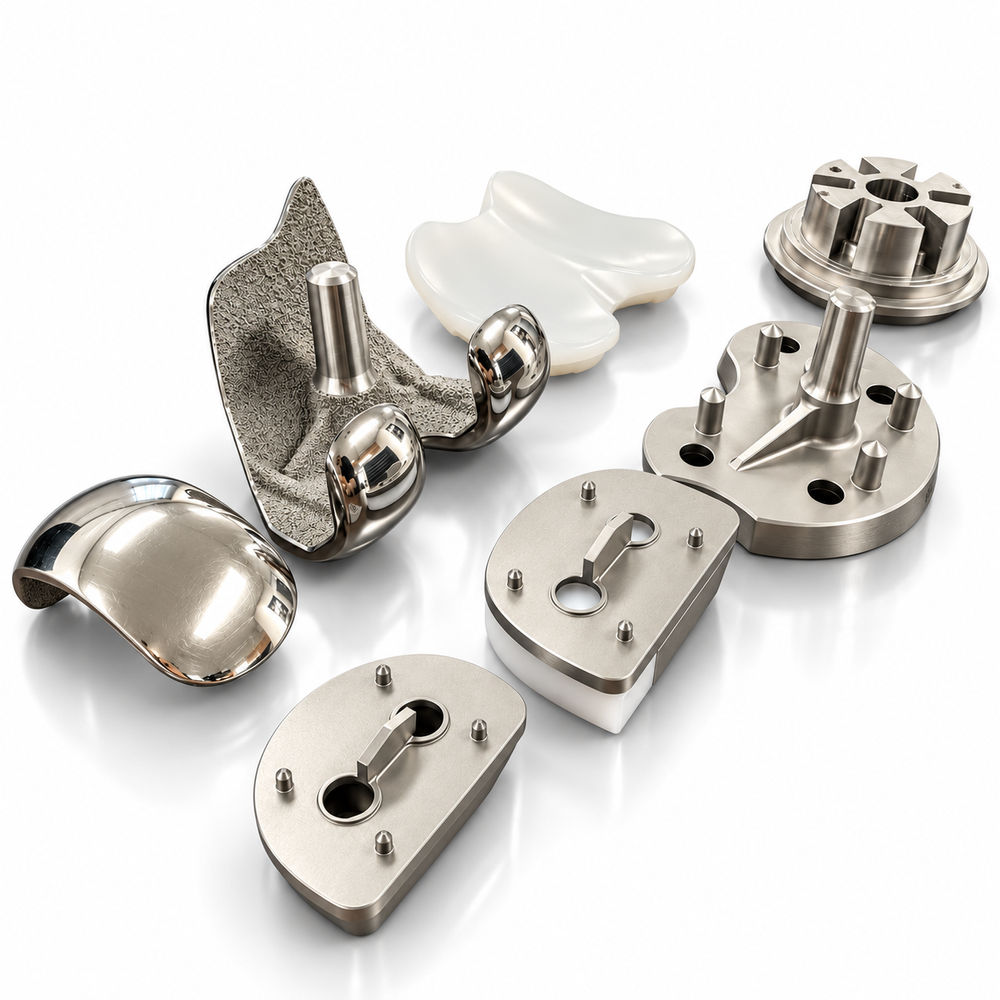
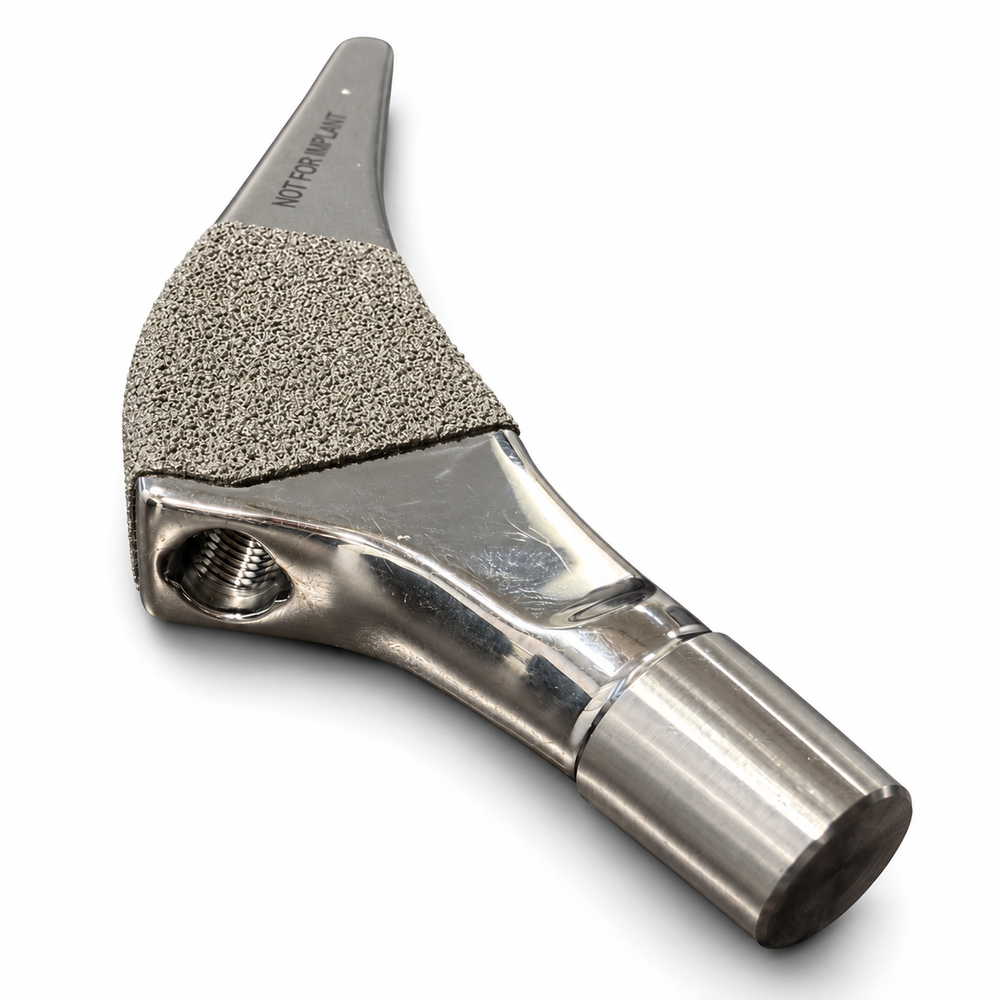
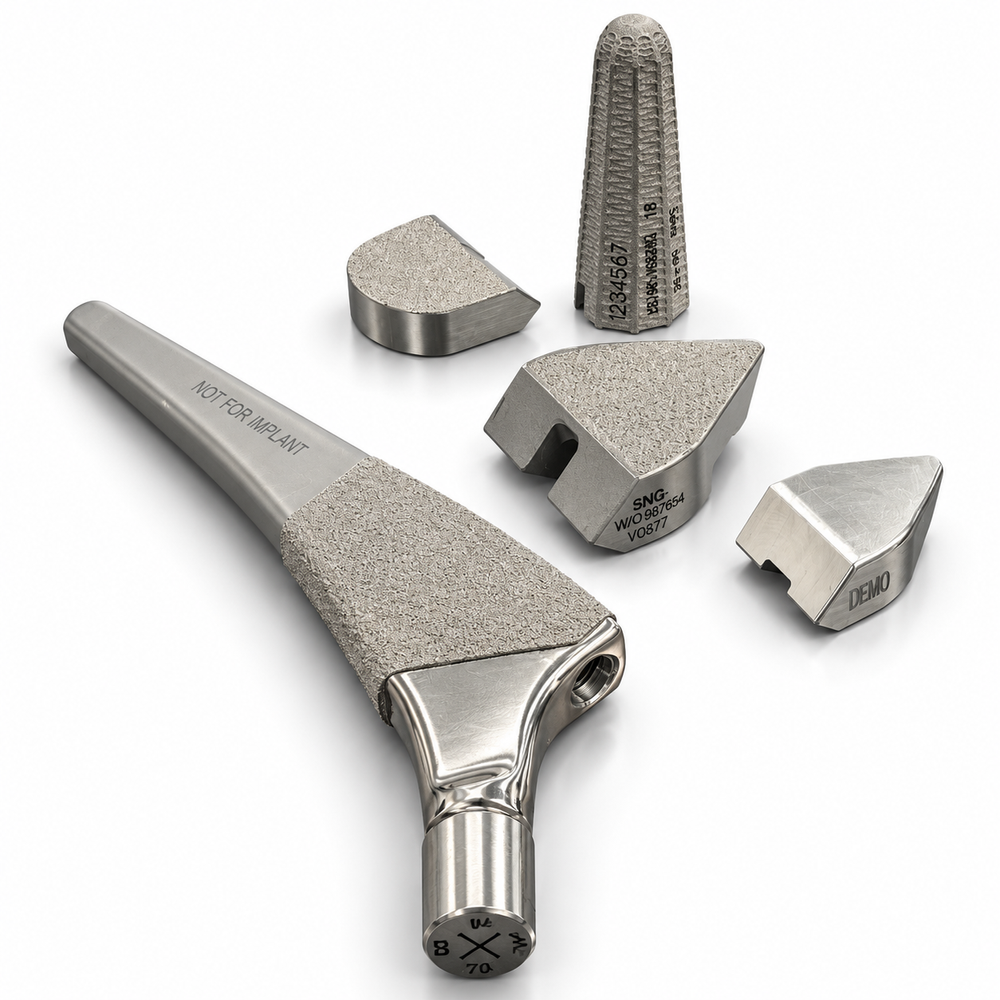
Reamers, drivers and instrument components for knee, trauma, spine, sports medicine and CMF systems, with tight concentricity and repeatable fits. Orthopedic instruments and implant components
Bone screws and pins
Cannulated, cancellous, cortical, pedicle and bioabsorbable bone screws and small threaded parts, turned complete on the Swiss in one cycle.
Device and housing components
Multi-face milled parts and machined inserts that feed insert molding, cleanroom assembly or finished-device builds.
Materials we machine
Medical and exotic metals
Titanium Grade 2 (CP, ASTM F67), Grade 5 (Ti-6Al-4V) and Grade 23 (Ti-6Al-4V ELI, ASTM F136), stainless steel in all grades including 316L (ASTM F138) and 17-4 PH, Inconel 625 and 718. Specific alloys confirmed per program.
Tool steels and common metals
P20, D2, S7, A2, H13, O1, 4140, aluminum, copper and brass, including the hardened steels used in our own mold tooling.
Engineered plastics
PEEK, polycarbonate, PTFE, acetal, nylon 6/6, UHMWPE, ABS, acrylic and polypropylene.
Metal and polymer under one roof
Most machine shops hand off to a molder, and most molders buy machined parts. UTP does both. Machined inserts go straight into our insert molding cells, and machined and molded parts meet in our cleanroom or controlled assembly. You manage one supplier, one quality agreement and one schedule.
Precision machining questions
What tolerances can UTP hold on machined parts?
We hold ±0.0005" on most milled features, down to ±0.0001" on select features, and grind to ±0.0001" consistently. The achievable tolerance for each feature is confirmed during DFM.
What size parts can your Swiss machine handle?
Our Tsugami S206-II Swiss-type lathe turns parts up to 20 mm in diameter.
Do you machine titanium and stainless steel?
Yes. We machine titanium Grade 2 (CP, ASTM F67), Grade 5 (Ti-6Al-4V) and Grade 23 (Ti-6Al-4V ELI, ASTM F136), stainless steel in all grades, Inconel 625 and 718, hardened tool steels, and engineered plastics including PEEK. Specific alloys are confirmed per program.
Do you take low-volume or prototype machining orders?
Yes. We machine prototypes and first articles through production volumes, with no minimum order.
How do you inspect machined parts?
Parts are inspected in process and in our onsite QC laboratory on two CMMs, which measure features to 0.0001", a Keyence vision measurement system, and a profilometer for surface finish requirements.
Can you machine parts for defense programs?
Yes. UTP is ITAR compliant, with controls scaled to each part's classification, and CMMC Level 1 certified.
Talk to an engineer, not a call center.
Send the print, the material and the quantity. A UTP engineer replies within two business days with feasibility and a path to first article.